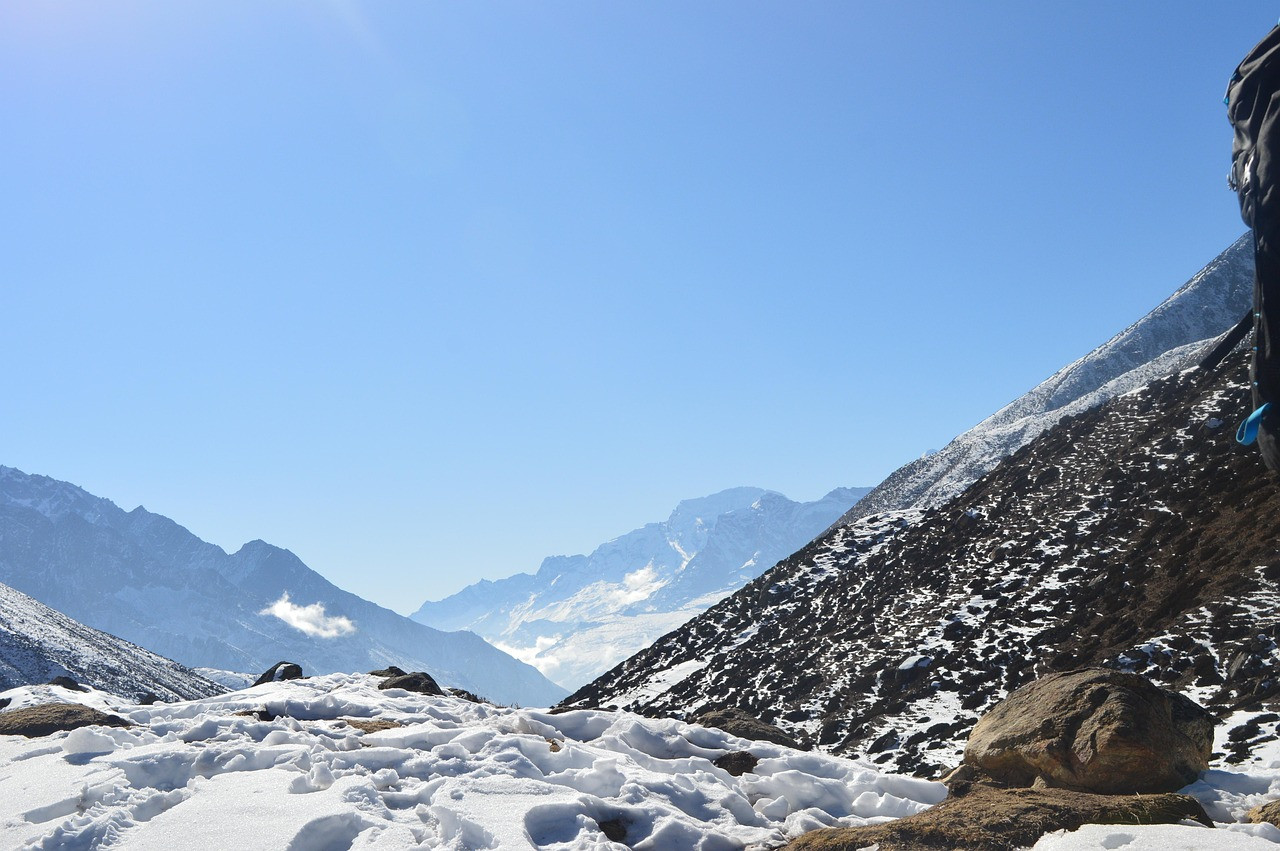








The Dhaulagiri Expedition takes climbers to the summit of Mt. Dhaulagiri I, the seventh highest mountain in the world at an altitude of 8,167 meters (26,795 ft). Located in northwestern Nepal, just west of the Kali Gandaki Gorge (the world’s deepest), Dhaulagiri is part of the spectacular Dhaulagiri Himalaya. The name "Dhaulagiri" comes from Sanskrit, meaning "White Mountain", and its imposing presence is seen from popular trekking routes like the Annapurna Circuit.
Unlike Everest or Manaslu, Dhaulagiri is far more remote and technical. The normal route follows the Northeast Ridge, a challenging path filled with crevasses, avalanche-prone slopes, and complex icefalls. Due to its harsh conditions and difficulty, this expedition is recommended only for experienced high-altitude climbers with prior success on peaks above 7,000 meters. The summit success rate is lower, and the fatality rate is relatively high compared to more commercial 8000ers.
The expedition usually takes 45 to 55 days, including trekking to Base Camp (through remote Myagdi valleys), acclimatization rotations, and the summit push. The best time to climb is spring (April–May), when weather is relatively more stable. Dhaulagiri offers not only a true test of alpine skills but also an isolated, wild Himalayan experience with minimal crowds.



Climbing Dhaulagiri is significantly more remote and dangerous than many other 8000ers. The long approach involves trekking through wild and rugged terrain, often without teahouses or modern facilities. The altitude gain is rapid, and the mountain’s avalanches and seracs are among the most serious dangers. Base Camp is located at around 4,750m, with several camps established above for the climb. Most climbers establish up to Camp III (~7,400m) before pushing for the summit.
The mountain has seen far fewer ascents than Everest or Manaslu, making logistics more demanding. Teams must be self-sufficient and prepared for extended stays in bad weather. Good communication, proper acclimatization, reliable oxygen systems, and strong Sherpa support are essential. Mental endurance, patience, and technical climbing ability are must-haves.
Upon arrival at Tribhuvan International Airport in Kathmandu, you will be welcomed by a representative and transferred to your hotel. After check-in, you can rest or explore the city depending on your arrival time.
Hotel/Lodge
Breakfast/Lunch/Dinner
Today is set aside for expedition preparation. You will attend a detailed expedition briefing with your guides and liaison officers, review the climbing strategy, and complete permit formalities. Meals include breakfast and dinner. Overnight at a hotel.
Hotel/Lodge
Breakfast/Lunch/Dinner
Take a short and scenic morning flight to Pokhara, a tranquil city by the lake and the starting point for many treks in western Nepal. After hotel check-in, you can spend the rest of the day exploring the lakeside or resting. Breakfast is included.
Hotel/Lodge
Breakfast/Lunch/Dinner
Begin a scenic drive through the Kali Gandaki valley, past Jomsom, to reach the charming village of Marpha. The journey offers great views of the Annapurna and Dhaulagiri ranges. Meals include breakfast, lunch, and dinner. Overnight at a lodge.
Hotel/Lodge
Breakfast/Lunch/Dinner
Today is an acclimatization and rest day. You’ll take a side trip to visit the sacred site of Muktinath, known for its religious and natural significance. The excursion also supports your adaptation to higher elevations. Meals included throughout the day. Overnight at a lodge.
Hotel/Lodge
Breakfast/Lunch/Dinner
The trek begins with a steady ascent through alpine terrain. As you gain altitude, the vegetation thins and the trail becomes more rugged. You’ll reach Yak Kharka, a remote grazing area used for camping. Meals included and overnight in tents.
Hotel/Lodge
Breakfast/Lunch/Dinner
This is a challenging day as you cross Thapa Pass and descend into the Hidden Valley, reaching Dhampus Base Camp. The views from the pass are spectacular, offering a preview of the dramatic landscapes ahead. Camp overnight with full board meals.
Hotel/Lodge
Breakfast/Lunch/Dinner
Continue the journey to the official Dhaulagiri Base Camp. The trail takes you through snowfields and rocky terrain. Upon arrival, base camp is set up and preparations begin for the climbing phase. Meals and accommodation in tents.
Camp
Breakfast/Lunch/Dinner
Over the next three weeks, you will follow a rotation strategy. This includes establishing and spending nights at Camp I and Camp II, and making a touch climb to Camp III before returning to base camp for rest and recovery. This helps your body acclimatize and prepares you for the summit push. All meals and accommodations are in tents.
Camp
Breakfast/Lunch/Dinner
During this summit window, you will move from base camp to Camp II, continue to Camp III, and then launch the summit attempt. The route is technically demanding and exposed, requiring careful pacing, weather monitoring, and teamwork. After summiting, you will descend to either Camp II or directly to base camp depending on conditions. Full board and camping throughout.
Camp
Breakfast/Lunch/Dinner
After a successful climb and well-earned rest at base camp, you begin your descent. Today’s trek takes you back through familiar terrain to Yak Kharka, where you’ll camp for the night. All meals included.
Camp
Breakfast/Lunch/Dinner
Continue the descent from the alpine region back to the village of Marpha. The trail becomes easier and greener as you lose altitude. Overnight at a lodge with all meals included.
Hotel/Lodge
Breakfast/Lunch/Dinner
Today you’ll drive back through the Kali Gandaki gorge to Pokhara, returning to civilization. Upon arrival, you can check into your hotel and enjoy the comforts of the city. Meals include breakfast and lunch.
Hotel/Lodge
Breakfast/Lunch/Dinner
Take a short domestic flight from Pokhara to Kathmandu. Upon landing, transfer to your hotel and spend the day relaxing, shopping, or enjoying a meal with your climbing team. Breakfast included.
Hotel/Lodge
Breakfast/Lunch/Dinner
This is a free day in Kathmandu, ideal for recovery, sightseeing, or souvenir shopping. It also acts as a buffer day in case of any delays earlier in the itinerary. Breakfast is provided at the hotel.
Hotel/Lodge
Breakfast/Lunch/Dinner
After breakfast, you will be transferred to Tribhuvan International Airport for your international departure. This concludes your Dhaulagiri Expedition.
Breakfast/Lunch/Dinner
Hotel/Lodge
If this itinerary doesn't suit you and you'd like to create your own, let's talk now!

Our meals during your stay in Kathmandu will be on a bed & breakfast plan. We will host a welcome dinner and a farewell dinner in Kathmandu. Any additional meals during your stay will be at your own expense.
During the trek, your meals are included as part of our package. You will have a choice of breakfast, lunch, and dinner, as well as tea/coffee during your trekking days with us. We will source food for your group from guesthouses, prepared by trained local chefs. We take care to ensure that your food is fresh and hygienic.
During the climb, your meals is cooked by our Sherpa Cook, and support team. They prepare fresh, hygienic food, and boil the water for drinking.

For this trip, we use 4-star deluxe luxury hotels in Kathmandu to ensure your stay is comfortable. During the trek, you will be staying in mountain lodges and guest houses owned by local Sherpas, offering a nice and comfortable experience. You will have hotel with attached bathroom staying in Lukla whereas other places will have regular Sherpa Community Lodges which are clean, neat and comfortable.
During your climbing days, you will be staying in two men tented camp.
We have compiled a list of departure dates for this expedition each month. Please feel free to select a date and time that best suits your schedule. In the event that none of the listed dates align with your availability, kindly inform us of your preferred date and time, and we will gladly accommodate your request. As a personalized tour and trekking operator in Nepal, we predominantly offer private departure dates for this climb.
However, if you prefer to expedition in a group, please let us know. We will have no trouble organizing this climb as a group departure on a date and time convenient for you.
Typically 45–55 days, including trekking, acclimatization, and summit attempt.
Yes. You must have experience with high-altitude mountaineering, ideally on 7,000m+ or another 8,000er.
The success rate is lower than Everest or Manaslu due to technical challenges and weather. Preparation is key.
Yes, most climbers use oxygen above Camp III, although some elite climbers attempt it without.
Spring (April–May) is the best season. Autumn (late Sept–Oct) is riskier due to unstable snow.
 Saftey Trips Expert Guides Resonable Price Experienced

 Google
 Tripadvisor