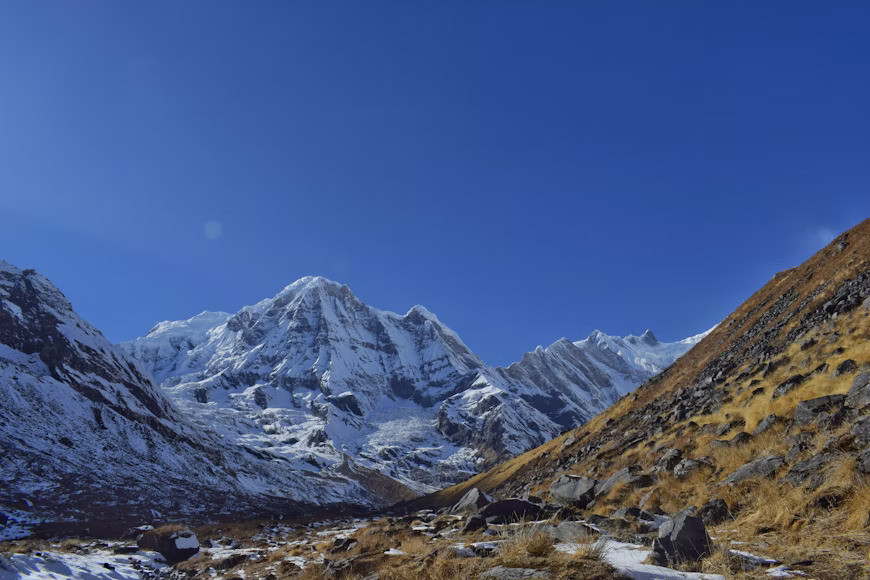








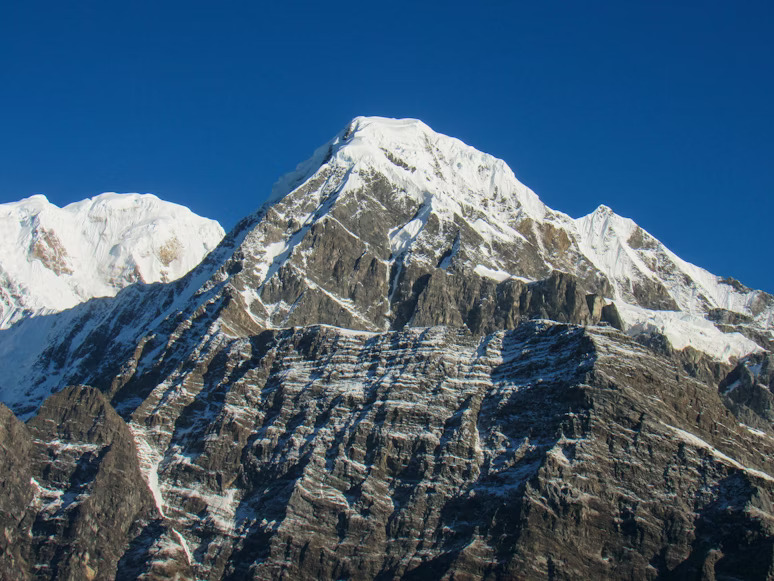
The Annapurna Circuit Trek is one of Nepal’s most legendary and diverse trekking routes. It offers everything a trekker could dream of — dramatic scenery, soaring peaks, deep gorges, lush valleys, high mountain passes, and centuries-old culture. This classic journey circles the Annapurna Massif, taking you from subtropical forests and terraced fields to alpine landscapes and high mountain deserts, all in a single adventure.
The trek begins in the lower Marsyangdi Valley, where you pass through picturesque villages, rice paddies, and rhododendron forests. As you ascend, the climate, culture, and scenery begin to shift. You’ll encounter Tibetan-style communities, visit ancient monasteries, and eventually reach the trek’s highest point: Thorong La Pass, standing at a breathtaking 5,416 meters.
Crossing this pass is a major highlight — physically challenging, but immensely rewarding. Afterward, the trail descends into the arid Mustang region, where you’ll visit Muktinath, a sacred site for both Hindus and Buddhists, and continue on through the Kali Gandaki Gorge, the deepest in the world.
The trek traditionally ends in Jomsom or Tatopani, and many trekkers choose to extend the experience with a visit to Poon Hill or a relaxing stop in Pokhara. With its variety of landscapes and cultures, the Annapurna Circuit remains a favorite for those seeking both challenge and beauty in the Himalayas.



Maximum altitude is 5,416 meters at Thorong La Pass — proper acclimatization is essential.
Trekkers must be in good physical condition and prepared for cold nights and long trekking days.
Best seasons are spring (March to May) and autumn (September to November) when the weather is stable and views are clearest.
Altitude sickness is a real risk. Trekkers should ascend gradually, stay hydrated, and follow the guide’s advice.
Teahouses along the trail offer basic lodging and meals. Facilities get more limited at higher altitudes.
Drinking water must be purified or bought bottled.
Cash is necessary, especially after leaving Besisahar — no ATMs along the trail.
Your journey begins with your arrival in Kathmandu, Nepal’s vibrant capital city. A representative from the trekking company will greet you at the airport and transfer you to your hotel. After check-in, you’ll have time to rest or explore the lively streets of Thamel and prepare for your upcoming trek.
Hotel/Lodge
Breakfast/Lunch/Dinner
After an early breakfast, you leave Kathmandu for a scenic drive along the Nepal Western Highway toward the village of Syange. The journey takes about seven hours and passes through beautiful hills, small towns, and river valleys. You’ll spend the night in Syange, where the fresh mountain air signals the start of your adventure.
Hotel/Lodge
Breakfast/Lunch/Dinner
Your first day on the trail begins with a walk through lush green landscapes and across suspension bridges over the Marsyangdi River. The trail winds past charming villages and waterfalls as you make your way to Dharapani. The walk takes about six hours and gradually introduces you to the pace and rhythm of the Himalayas.
Hotel/Lodge
Breakfast/Lunch/Dinner
Today’s trek leads you deeper into the Annapurna region. The trail climbs steadily through dense forests and offers your first glimpses of snow-capped peaks in the distance. After crossing a few more rivers and ridges, you reach Chame, the district headquarters of Manang. It’s a beautiful village surrounded by pine forests and dramatic cliffs.
Hotel/Lodge
Breakfast/Lunch/Dinner
You continue along a stunning trail lined with apple orchards, rock walls, and Himalayan views. The air grows cooler as you ascend to Pisang, a picturesque village nestled below towering peaks. This part of the trek takes about five hours and provides a noticeable change in both climate and landscape.
Hotel/Lodge
Breakfast/Lunch/Dinner
The journey from Pisang to Manang offers incredible panoramic views of the Annapurna range. You pass through Tibetan-style settlements and monasteries, with options to take the upper or lower trail depending on your guide’s recommendation. Arriving in Manang, you’ll find yourself in a culturally rich village that serves as a key acclimatization stop.
Hotel/Lodge
Breakfast/Lunch/Dinner
To prepare your body for the higher altitudes ahead, you’ll spend a rest day in Manang. This day includes a short hike to places like Gangapurna Lake or viewpoints above the village. The goal is to stay active while allowing your body time to adjust. The day also gives you a chance to explore local life and relax before the next stretch of the trek.
Hotel/Lodge
Breakfast/Lunch/Dinner
After a restful day, you begin ascending toward Yak Kharka. The landscape becomes more barren and rugged as you rise above the treeline. Today’s walk is shorter but important for gradual acclimatization. You’ll pass grazing pastures and perhaps spot blue sheep or yaks along the way.
Hotel/Lodge
Breakfast/Lunch/Dinner
Continuing the steady ascent, you head to Thorong High Camp, the final stop before the high pass. The altitude becomes more noticeable here, so your guide will encourage a slow and steady pace. After about five hours of walking, you’ll reach the high camp nestled beneath the mountains, where you’ll spend the night in preparation for the biggest day of the trek.
Hotel/Lodge
Breakfast/Lunch/Dinner
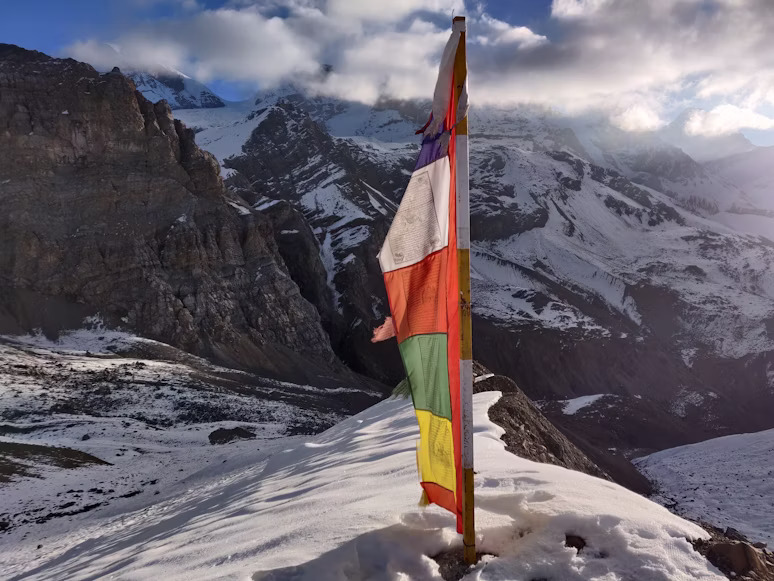
This is the most challenging and rewarding day of the trek. You begin early in the morning to make the long climb up to Thorong-La Pass, one of the highest trekking passes in the world. The views from the top are absolutely spectacular, with snow-covered peaks stretching in all directions. After celebrating your achievement, you descend steeply to Muktinath, a sacred site for both Hindus and Buddhists, where you’ll rest after a long but unforgettable day.
Hotel/Lodge
Breakfast/Lunch/Dinner
The trail today is easier as you descend further into the Kali Gandaki Valley. You pass through Jomsom, a windy town with an airport, and continue to Marpha, a beautiful Thakali village known for its apple orchards and clean stone-paved streets. The walk is peaceful, and the scenery shifts dramatically from alpine to high desert.
Hotel/Lodge
Breakfast/Lunch/Dinner
From Marpha, you take a scenic drive down to Tatopani, meaning "hot water" in Nepali. This village is famous for its natural hot springs, where you can relax your tired muscles after days of trekking. The atmosphere here is warm and welcoming, and it marks your return to more temperate elevations.
Hotel/Lodge
Breakfast/Lunch/Dinner
After breakfast, you begin a steady climb through forest trails and hillside villages as you make your way to Ghorepani. Though the walk is uphill and can be challenging, it’s also one of the most beautiful sections, with rhododendron forests and mountain views. You reach Ghorepani by late afternoon, where the cool mountain air refreshes you.
Hotel/Lodge
Breakfast/Lunch/Dinner
You start the day early with a walk down to Tirkhedhunga, passing through scenic villages and lush forests. The descent is gentle and rewarding after your long journey. Once you reach Tirkhedhunga, a short two-hour drive brings you back to the peaceful city of Pokhara, where you can finally relax by the lake and enjoy a proper meal and hot shower.
Hotel/Lodge
Breakfast/Lunch/Dinner
After breakfast, you take a short flight back to Kathmandu. Once in the capital, you’re transferred to your hotel where you’ll have free time for last-minute shopping, visiting cultural sites, or simply relaxing after the trek.
Hotel/Lodge
Breakfast/Lunch/Dinner
Depending on your flight schedule, you’ll be transferred to the airport for your international departure. With memories of soaring peaks, ancient villages, and unforgettable adventures, you leave Nepal with a sense of achievement and connection to the mountains.
Breakfast
If this itinerary doesn't suit you and you'd like to create your own, let's talk now!

Your meals during your stay in Kathmandu will be on a bed & breakfast plan. We will host a welcome dinner and a farewell dinner in Kathmandu. Any additional meals during your stay will be at your own expense.
During the trek, your meals are included as part of our package. You will have a choice of breakfast, lunch, and dinner, as well as tea/coffee during your trekking days with us. We will source food for your group from guesthouses, prepared by trained local chefs. We take care to ensure that your food is fresh and hygienic.

For this trip, we use 4-star deluxe luxury hotels in Kathmandu to ensure your stay is comfortable. During the trek, you will be staying in mountain lodges and guest houses owned by local Sherpas, offering a nice and comfortable experience. You will have hotel with attached bathroom staying in Lukla whereas other places will have regular Sherpa Community Lodges which are clean, neat and comfortable.
We have compiled a list of departure dates for this trek each month. Please feel free to select a date and time that best suits your schedule. In the event that none of the listed dates align with your availability, kindly inform us of your preferred date and time, and we will gladly accommodate your request. As a personalized tour and trekking operator in Nepal, we predominantly offer private departure dates for this climb.
However, if you prefer to trek in a group, please let us know. We will have no trouble organizing this climb as a group departure on a date and time convenient for you.

The Annapurna Circuit is a long and varied trek, so being well-prepared is essential. The trail stretches across multiple climate zones—from warm, humid lowlands to dry alpine areas and snowy passes. You’ll need to dress in layers and be ready for anything from sunny afternoons to freezing nights, especially above 4,000 meters. Acclimatization is built into the itinerary, particularly with a rest day in Manang, to help reduce the risk of altitude sickness. Still, it's important to go slowly, drink plenty of water, and pay attention to how your body responds.
The route passes through many villages, each with its own cultural charm and ethnic identity. You’ll meet Gurung, Thakali, and Tibetan-influenced communities, and visit temples, monasteries, and traditional homes. While modern life has reached some parts of the trail, especially with road access in sections, most of the trek still feels remote and peaceful. Electricity and mobile service are available in lower areas, but become limited the higher you go. Cash is a must, as there are no ATMs once you leave the main towns. All permits and documents are usually handled by your trekking company, but make sure to carry copies just in case.

As of 2023, Nepal requires trekkers to hire a licensed guide for safety and regulation. Solo trekking without a guide is no longer permitted on most routes.
Not usually. In peak seasons, trails are well-trodden and snow-free. In winter or early spring, microspikes may be useful.
Yes. Though roads reach higher up the valley now, most trekking routes use side trails to avoid roads. The core experience and scenery remain spectacular.
Yes, but limited. Some villages offer paid Wi-Fi, and mobile signals work intermittently depending on your provider.
 Saftey Trips Expert Guides Resonable Price Experienced

 Google
 Tripadvisor